Monday, March 21, 2011

The First Cut: Cabrini Madness

The first cut for Cabrini Madness 2011 took place last night at 11:59 pm (long after all of the NCAA games were over for the night--I guess we now know which tournament is more intense!).

Due to some confusion regarding tournament policies for matching donations, Commissioners EL Da'Sheon Nix and Bradley Troast have decided to advance 9 teams this week.


The following teams are advancing to the next round:
1. $2,161..... Cabrini Allstars
2. $2,118 ... The Dream Team
3.
$1,561..... Boom Goes the Dynamite
4. $1,385 ..... The Kids Are All Bright
5. $1,338 ....... The Golden Stars

6.
$1,285 ..... Team High5ive
7.
$1,265 ... Change Makers
8. $1,215 ..... The Green Team
9. $1,208 .....
Cabrini Loyalty

The following teams didn't make the first cut, but still raised a combined $1,828 for Cabrini Connections:

10. $785 ... The Blue Chips
11. $600 .......
The Free Agents

12.
$330 ....... Team 5Dragons
13. $113 ..... Running for Cabrini


Teams have demonstrated a lot of creativity thus far in the tournament. We've seen teams raise money through bowling nights, wii tournaments, wing eating contests (see an action shot to the left), chili cook-offs, pizza sales, and online giving campaigns. I look forward to seeing what teams do in the final few weeks of competition!

I'd like to take a moment to thank my family and friends who have supported my team, The Kids Are All Bright, and have helped us move to the second round standing strong at #4. My personal competitive side and desire to win the tournament aside, your generosity helps us keep the doors open to a really amazing program!

As many readers know, it has been a challenging financial year for Cabrini Connections, Tutor/Mentor Connection. However, our organization is not alone in facing ongoing financial obstacles. A study was released just today by the Nonprofit Financial Fund which indicates that 87% of nonprofits feel "the recession is not over." The study also found that while 85% of nonprofits anticipate an increased demand for their services in 2011, only 46% of organizations expect to be able to meet this need.

While this study reinforces the challenging landscape faced by nonprofits such as Cabrini Connections, Cabrini Madness is a really positive reminder that we have a lot of people willing to support the program and advocate on its behalf.


Congratulations to all teams, and good luck in the rest of the tournament. For all tournament fans, stay on top of tournament news, media updates, and standings on the
official Cabrini Madness site.

Please support your favorite team before the next cut on Sunday, March 27th
!

Friday, March 18, 2011

May 2011 Tutor/Mentor Leadership & Networking Conference Announced!

As those familiar with Tutor/Mentor Connection know, every May and November we organize the Tutor/Mentor Leadership & Networking Conference. Each conference provides an opportunity for leaders of tutoring and mentoring programs to share best practices and collaborate toward shared goals.

Since late Spring is when tutoring and mentoring programs generally finish their sessions for the school year, the May conference celebrates each program's accomplishments while also equipping program leaders with momentum and fresh ideas to plan for the next year of programming. In addition, the May conference is intended to generate attention for tutoring and mentoring programs from
outside of the nonprofit community so that organizations can recruit volunteers, donors, and investors during the summer months.

This week Tutor/Mentor Connection President, Dan Bassill, and I had a meeting to finalize the May 2011 conference date and location. The next conference will be held on Thursday, May 19th and Friday, May 20th at Victory Apostolic Church in Matteson, IL.

Victory Apostolic Church was built in 2008 and has a beautiful facility including wireless throughout, various breakout spaces with natural light, and free parking. In addition to this state-of-the-art facility, partnering with a church in Matteson helps us to reach toward the goal of connecting with more programs in the South Suburbs. Although the church is about a 45 minute drive from the loop, we hope many programs will view this as a chance to expand the collective knowledge about tutoring and mentoring throughout the Greater Chicago Area.

We are also thrilled to be partnering with a religious institution since Tutor/Mentor Connection strives to engage faith communities in supporting tutoring and mentoring programs. You can learn more about this strategy by reading:
How Faith Communities Can Lead Volunteer Mobilization.

Dan and I had an energizing conference brainstorming meeting with Pastor Issac Greene (center), leader of Youth Ministries at Victory Apostolic Church, and Bernard Key (left), President of Key Link Technologies. Both Pastor Greene and Mr. Key have an excellent understanding of the organizations, leaders, and needs in Matteson and surrounding regions. They discussed a number of ideas for keynotes that would attract increased conference participation in addition to brainstorming ideas for raising awareness about the conference through a press conference.

Thanks to Pastor Greene and Mr. Key for helping with the planning process and to Victory Apostolic C
hurch for agreeing to host us in May. Thank you also to the many individuals who helped us search for a conference location including Toinette Gunn of PEAK, Amy Schachman of EPIC Academy Charter High School, and Carl Hurdlik of Chicago Public Schools (and a Cabrini Connections mentor).

If you would like to be a speaker at the May 2011 conference or know someone else who would lead a great workshop, please refer to the
Presenter Interest Form. Please contact me if you would like more information about getting involved.

Stay tuned for registration information and information on keynotes!

Monday, March 7, 2011

Spring Cleaning of Chicago Area Program Links

With Spring just around the corner (according to the calendar, not necessarily the weather forecast), I have been doing some cleaning of the Chicago-Area Program Links on the Tutor/Mentor Connection website.

While the Program Locator enables visitors to search for tutoring and mentoring programs based on a variety of criteria such as zip code and age group, the Chicago-Area Program Links provides a list of website links for tutoring and mentoring programs according to their region in Chicago. This allow prospective students and volunteers to find programs in their areas. Likewise, it provides an inventory of programs that the leaders of organizations themselves can use to build awareness of programs operating in the same region.


I went through all the links during the Fall to make sure programs are still operating. I revisited every website in the past week to ensure that all links are still correct and to touch base with many of the programs.


Of the 214 programs currently listed in this links directory, the regional breakdown is as follows:


The distribution of programs doesn't necessarily align with the distribution of need. This map that Mike Trakan created (click here to see enlarged view) shows the locations of programs in relation to poverty and poorly-performing schools.

It isn't rocket science to surmise that where there are more poorly performing schools, more tutoring and mentoring programs are needed to give kids academic skills, guidance, and motivation to graduate from high school and prepare for their next steps such as college, vocational schools, or careers. For those growing up in poverty neighborhoods and with failing schools, building relationships with a mentor can give students the support they need to realize their own potential.

Each one of the dots on the map represents a story, a program, a unique vision, a group of youth, a group of volunteers, and a staff.


When I look at Mike's maps, I try not to just see "dots" where programs are located. I try to picture in my head the tutoring sessions and programs occurring on a weekly basis at that center. By putting a "human face" on these locations, I realize more fully the impact of these programs and their vital roles within each community.
For a sneak-peak into a tutoring session at one of these locations (Cabrini Connections), see the latest Cabrini Madness video below.

Wednesday Night Lights from Cabrini Connections on Vimeo.


What would it take to keep these programs operating while also expanding the number of programs to reach all neighborhoods with failing schools?


Wednesday, March 2, 2011

Strategic City Planning through Maps


For my PIP seminar this week, I had the opportunity to visit Chicago Metropolitan Agency for Planning (CMAP). CMAP is a government organization that collects and aggregates data, then makes policy and planning recommendations for the city of Chicago based on the statistics they gather. Their goal is to use information to track quality of life changes and trends for citizens of Chicago based on a number of indicators such as health, education, transportation, and arts and culture. CMAP created a plan for the city called "Go To 2040" that provides suggestions for the city and its communities moving through the next few decades.


Much of CMAP’s work resonates with the work of Tutor/Mentor Connection. Both agencies create plans for
Chicago based on maps and data that can be visualized using sophisticated technologies. CMAP even launched a new site, "MetroPulse," in November 2010 where visitors can search and view maps and charts. It reminds me of T/MC's Interactive Map.


One staff member of CMAP, a self-proclaimed "tech geek," discussed how rare it is for a nonprofit to have staff members with Geographic Information Systems (GIS) skills. He emphasized how important it is for nonprofits to be able to base their services and their strategic planning on information that can be analyzed via GIS maps that provide region-specific indicators for issues like poverty, health care, and education. As he asserted, CMAP works to fill a void in the nonprofit industry by enabling access to GIS maps and data for organizations that don't have that staff position.


While most small organizations certainly don’t have GIS staff positions, Dan Bassill values this type of thinking enough that our 6 person staff does include a part-time GIS specialist. This is something that differentiates the type of work T/MC does from most other nonprofits. T/MC uses whatever information is available to help communities make strategic plans involving tutoring and mentoring. The maps that Mike creates show where tutoring and mentoring programs exist, where there is poverty, where there is crime, and a variety of other relevant statistics and community assets that enable leaders of municipalities, organizations, churches, and organizations to recognize areas of need.


While CMAP focuses on broad issues and general statistics to create a city-wide plan for a variety of issues, T/MC focuses specifically on what we identify as relevant to tutoring and mentoring youth.


During the seminar, several other PIP fellows asked questions about how CMAP connects its GIS maps, data, and recommendations to actually impacting change. My ears perk up since this is oftentimes a question that arises surrounding the work done by T/MC. How do our maps and articles translate into change? Is there evidence that this information leads to more high-quality, well-funded programs in Chicago’s most needy neighborhoods?


From my limited experience working at T/MC, I do think that the organization fills a necessary gap within the hundreds of organizations providing tutoring or mentoring services to youth in Chicago. Countless times since I’ve been here, Dan Bassill has told me about the ways he helped new programs get started or provided consulting services to existing programs. Events like Mapping Solutions also bring visibility to the needs in our city and provide information for leaders to make strategic plans that will yield positive impacts in their community.


At CMAP, the speaker asserted that the impact of GIS mapping is tough to track. It is hard to know when people use the information or when it clicks with the right individual. But he also spoke about some pretty tangible benefits that their maps and data can provide for organizations that I think T/MC also provides. For instance, organizations can use information aggregated and mapped by CMAP or by T/MC to use in their grant proposals to demonstrate needs in their areas. They can also use this type of data to help track changes and evaluate success of their programs.


This is just one example of how maps can be of use within the nonprofit community. But in order for this to happen, someone needs to be doing this work.

-----


"Increasingly, job growth relies on the availability of well-educated, skilled workers for knowledge-based industries. We can gain a significant advantage by ensuring that businesses and residents here have the skills necessary to compete with other global economic centers. Providing equitable opportunities to gain those critical skills is among our region's most complicated challenges. Disparities in educational attainment, health, and other measures--often based on income levels, race, or ethnicity--put the entire region's economy at risk."

-From CMAP's "Go to 2040 Comprehensive Regional Plan"

Friday, February 25, 2011

Enjoy Watching Sports on TV?

....if the answer to this question is YES, then you might recall the commercial featuring Michael Jordan called "Maybe." (For a refresher, you can watch it out at the bottom of this post).

Recently, Bradley Troast and EL Da'Sheon Nix remade this video to promote the Cabrini Madness tournament. Check it out below, and I hope it inspires you donate to your favorite team.

The Kids Are All Bright (my team), is sadly trailing in the tourney in 13th place. Help us climb the leader board before the first cut on March 20th!

Thanks for your support!

First, the MJ original:


And now the Cabrini Madness remake starring our own, EL Da'Sheon Nix:


Maybe from Cabrini Connections on Vimeo.

Friday, February 18, 2011

A Case for Collaboration: From Cochabamba to Chicago

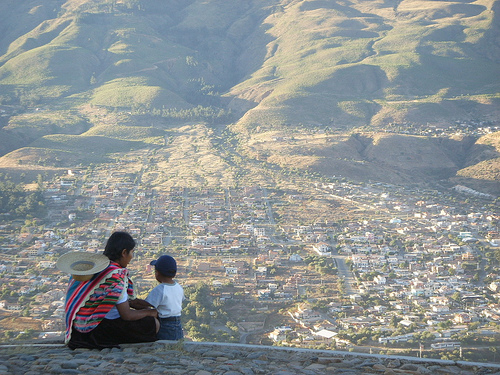
Last year for my senior thesis at Northwestern, I had the opportunity to research organizations working with street youth in Cochabamba, Bolivia. My fascination began when I studied abroad in 2008 for 4 months in Cochabamba and conducted ethnographic research with a group of youth who live and/or work on the city's streets. During that time, I also became aware of the vast number of organizations that exist offering support to these kids.

When I returned to Cochabamba a year later, I conducted interviews with the staff and directors of 8 organizations providing services to street youth. In these revealing conversations, it became apparent that many of the leaders of these organizations were unaware of what other nonprofits and nongovernmental organizations (NGOs) were ALSO doing on behalf of these youth. The leader of one organization even explained to me that he viewed similar organizations as competitors, and even witnessed certain organizations arguing over the exclusive rights to photograph specific groups of kids to use in their brochures and websites to attract donors.

It became apparent that while these organizations shared similar goals, they did very little to help each other. At best, the organizations were operating in silos unaware of the work of similar organizations. At worst, organizations were wasting scarce resources by re-inventing the wheel or replicating programs that others had realized were ineffective. And it wasn't the fault of the organizations' leaders. In fact, they had really good reasons why collaboration between similar organizations wasn't practical.

In my research I identified a number of reasons why collaboration amongst non-governmental organizations (NGOs) and nonprofits is hugely challenging. I mention this now, because so much of what I learned about the environment of NGOs in Bolivia applies to what I am learning about the nonprofit atmosphere in Chicago. For issues ranging from immigration to health care to education, a variety of organizations exist with similar goals. Yet the amount that organizations are able to work together is limited.

Some of those barriers to collaboration include:

1. Lack of time/challenges in coordinating:
Organizations are focused on serving the populations they work with and are too strapped for time to reach out to leaders of other organizations.

2. Competition for resources:
Organizations doing similar work are competing for the same grants, funding sources, and donors. Thus just like McDonald's probably wouldn't be eager to collaborate with Burger King, organizations aren't always interested in collaborating with their "competitors" but instead see the nonprofit landscape as "survival of the fittest" organization.

3. Differing Priorities: Organizations often have different ideas about how to tackle their particular social issue. While some organizations are secular, others are religiously affiliated. While some provide handouts, others are adamantly opposed to this type of assistance. These all might be reasons why organizations don't want to associate with one another.

4. Lack of awareness: Organizations may not realize that other nonprofits doing similar work even exist or where they operate.

Tutor/Mentor Connection works as a catalyst trying to break down these barriers to collaboration for organizations focused on tutoring and mentoring (especially in the Chicago region).

Here are some of the ways we tackle each challenge and our logic for why collaboration is beneficial:

1.Lack of time/challenges in coordinating:
T/MC puts in the time to coordinate between organizations, reach out to other programs, and plan ways for leaders to convene and share best practices. T/MC also builds online resources so that leaders can easily and quickly access information T/MC has compiled from various organizations.

2. Competition for resources: Perhaps what we should be asking ourselves is not: "Is there competition for resources between organizations?" (the answer will always be YES), but instead: "Is there competition for CLIENTS for our services." Let me explain. If two organizations are competing to serve the same target population, then perhaps it doesn't make sense for both organizations to exist. BUT for big social issues like "helping urban youth succeed and graduate in Chicago" or "getting kids off the streets in Cochabamba" the demand for services is unfortunately, greater than the number of organizations able to supply help. So viewing other organizations as competitors really doesn't make sense.

The nonprofit industry is different from business because when there is more demand for our services, it generally costs us money. Each student in a program like Cabrini Connections, costs about $1,500 per year. Thus the more kids we help and the greater the demand for our services, the greater our expenses. It's important to keep this in mind when realizing that the survival of other organizations actually alleviates some of the expenses off of a single organization while working toward shared goals and allowing more people to be served.

However, it's overly simplistic to think that competition for funding is not a huge factor. Thus Tutor/Mentor Connection focuses on the ways that drawing resources or attention to one organization benefits us all. When one organization gets a grant that leads to media attention, tutoring and mentoring is spotlighted as a need in this city so all programs can harness this attention to get funding for their work. In addition, TMC works to organize events throughout the year that involve organizations throughout the city. By creating a "buzz" surrounding tutoring/mentoring, we all get attention (and hopefully resources).

3. Differing Priorities: Learning about other organizations' strategies can be helpful as programs share what works and what does not. Collaborating doesn't mean all organizations have to sign on to the same mission statement, and in fact, having different focuses may help get diversified donors.

4. Lack of Awareness:
T/MC has invested in creating a database of tutoring and mentoring programs in Chicago so that students, volunteers, donors, and programs are aware of what is out there. We also work to bring program leaders together via conferences, online forums, and email contact so that they are aware of the work other organizations are doing.

This type of collaborative action through a decentralized organization is not widely practiced within the non-profit sector. Not in Bolivia, and not in Chicago. Perhaps that is why we have always struggled to find the type of funding needed to operate Tutor/Mentor Connection.

But it seems that in the age of electronic collaboration, it is the direction where the nonprofit sector NEEDS to head. This infographic illustrates "the new culture of collaboration" and refers to some of the benefits of collaboration in the digital age.

Monday, February 14, 2011

A Worthwhile Experiment


What began as a personal experiment by Sasha Dichter, director of business development of Acumen Fund, has launched into a campaign to reboot Valentine's Day as "Generosity Day."

The "generosity experiment" began when instead of saying "no" to someone asking for money on the street, Dichter gave the man a few dollars. He decided that for one month, he would actively say "yes" to every panhandler, request for a charitable contribution, meeting invitation, or even email he'd been avoiding in his inbox. He describes the experiment as "transformative."

Propelled by his month-long personal experience, Dichter decided to launch a campaign to make Valentine's Day about more than romantic love, but about sharing love, generosity, and kindness to all those around us. As Dichter writes on his blog: "The goal is to spend Valentine’s Day being more generous, giving more money, sharing of yourself, being of service. All acts of generosity, small and big alike, count. But you have to say YES to everything that’s asked of you, all day long! It’s about creating more generosity in the world, and becoming a more open person along the way."

Dichter offers some ideas for Generosity Day including:
  • Give to people on the street.
  • Tip outrageously.
  • Help a stranger.
  • Write a note telling someone how much you appreciate them.
  • Smile.
  • Donate (more) to a cause that means a lot to you.
  • Take clothes to GoodWill.
  • Be patient with yourself and with others.
  • Replace the toilet paper in the bathroom.
I hope you'll join me in celebrating Generosity Day. I think I'll start by sharing some of my Valentine's Day chocolate...that might be a little out of my comfort zone, but I think it's a worthy experiment!

If your generous spirit inspires you to SHARE with a cause you care about, please consider giving a tax deductible donation to Cabrini Connections, Tutor/Mentor Connection through our main donation page or support your favorite Cabrini Madness Team.
Thank you!